A scrubber has one job: to bring the gas leaving a plant within its emission limit, every day. SH Engitech’s engineering team explains how wet scrubbers work, the main types, and what decides the right design for a corrosive gas stream.
Principle
How a wet scrubber works
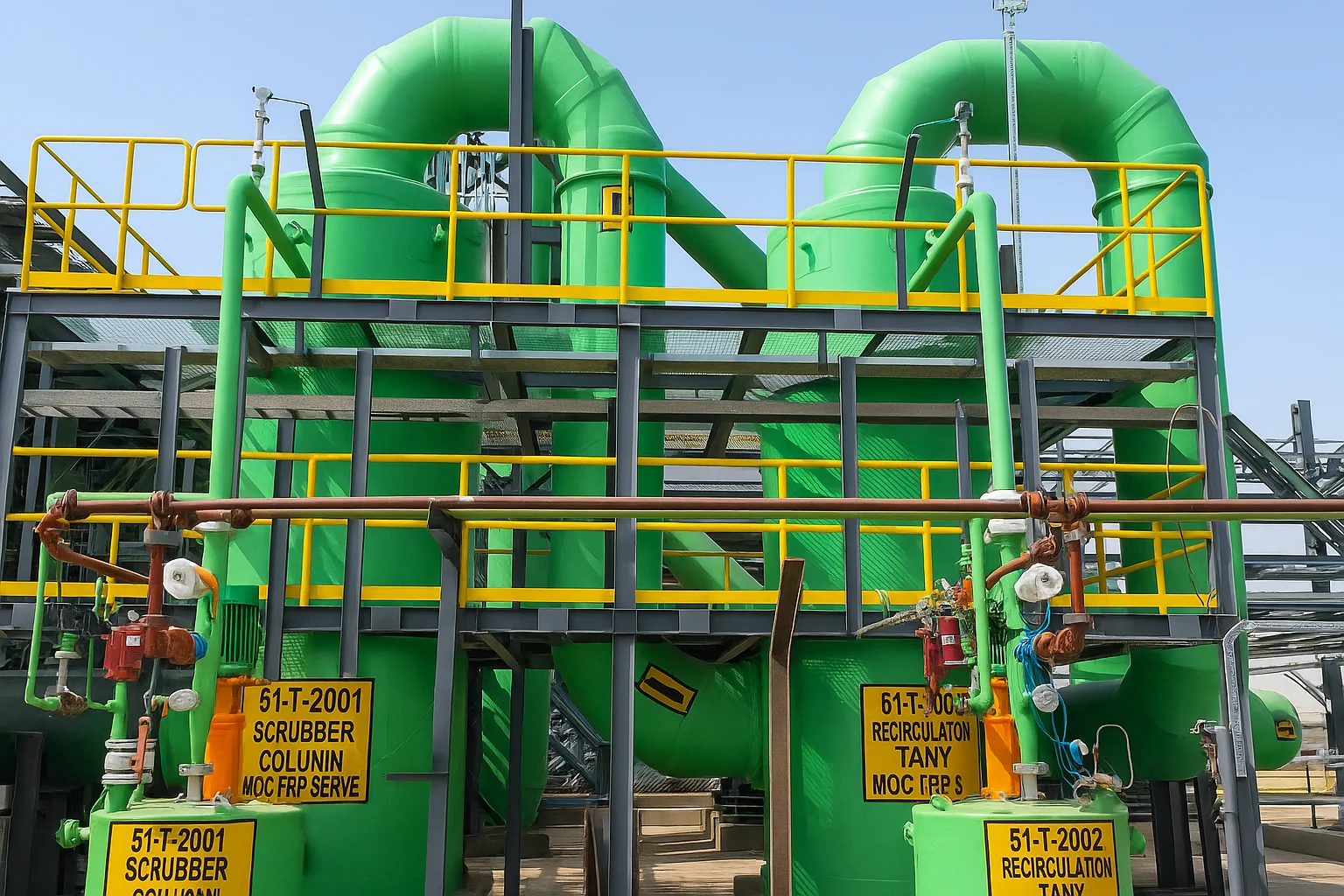
In a wet scrubber, the gas is brought into close contact with a liquid. The contaminant passes from the gas into the liquid, where it is removed by absorption, neutralization or chemical reaction. The cleaned gas leaves through a mist eliminator, which stops droplets being carried out.
Selection
The key points
- Start with the gas. The contaminant, its concentration and the gas flow decide the scrubber type.
- Design for the outlet limit. The scrubber is sized to meet the emission limit, not only to remove most of the gas.
- Think about the by-product. In many cases the scrubbed gas can be recovered as a useful product.
Types
Packed bed, venturi or spray tower
| Type | How it works | Typical use |
|---|---|---|
| Packed bed | Gas rises through packing wetted by the liquid | Acid gases and soluble gases such as HCl, NH₃, SO₂ and Cl₂ |
| Venturi | Gas and liquid meet at high speed in a narrow throat | Fine dust and mists |
| Spray tower | Liquid is sprayed into an open tower | Large gas flows and gases with solids |
| Multi-stage | Two or more stages in series | Mixed gases, or very low outlet limits |
Many systems combine types, for example a venturi for particles followed by a packed bed for acid gas.
“A scrubber is judged at the stack. What matters is the outlet figure, measured under real operating conditions.”
SH Engitech Engineering Team
Material
Building for corrosive service
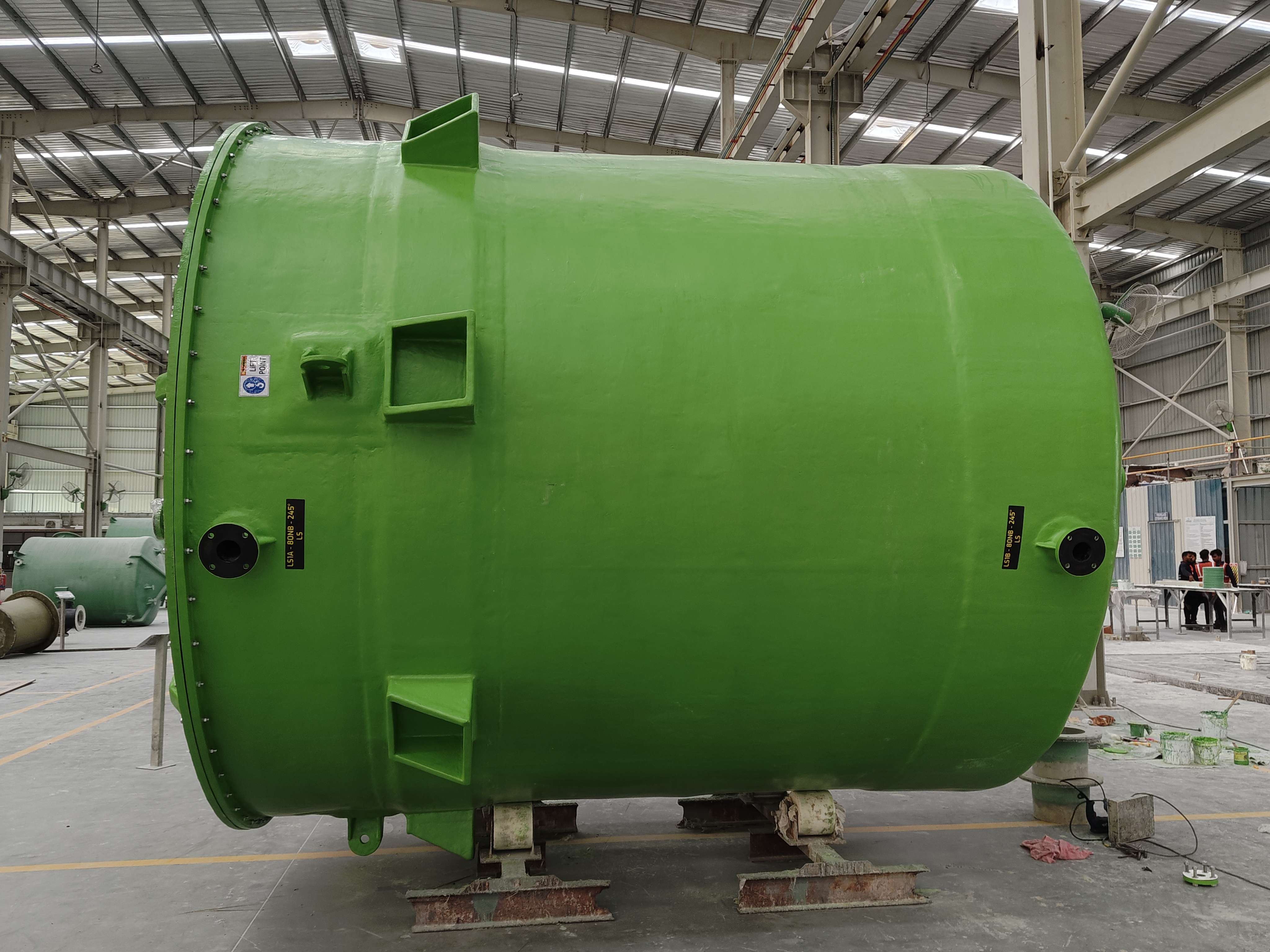
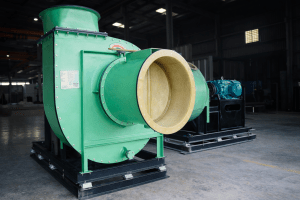
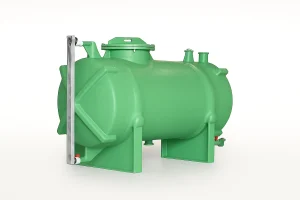
The gases a scrubber handles, and the liquids it uses, are corrosive. Scrubbers are therefore built in FRP, PP, PPH, PVDF or dual laminate, with the material selected for the chemistry. The same applies to the ducting, the recirculation tank and the FRP blower that moves the gas.
SH Engitech scrubbers handle HCl, NH₃, SO₂, Cl₂, NOx, BF₃, fluorine and nitric and sulphuric acid mist, at design temperatures up to 170 °C and in atmospheric or vacuum duty. Each design starts with a process simulation that fixes the heat and mass balance.
Recovery
Turning a waste gas into a product
A well-designed scrubber can recover value. HCl can be recovered as hydrochloric acid, chlorine as sodium hypochlorite, and ammonia as ammonium sulphate. This reduces the effluent to be treated and can offset running costs.
Selection
What your supplier needs to know
- The gases present and their concentrations
- The gas flow and temperature
- The outlet emission limit to be met
- Any dust or mist in the gas
- Whether a by-product is to be recovered
Contacto
Need support with gas scrubbing?
SH Engitech designs and supplies customized industrial scrubber systems on a turnkey basis, from process design to commissioning, with guaranteed outlet emission limits, for clients worldwide. Tell us your gas, flow and emission limit, and our engineers will recommend the right system.
Productos