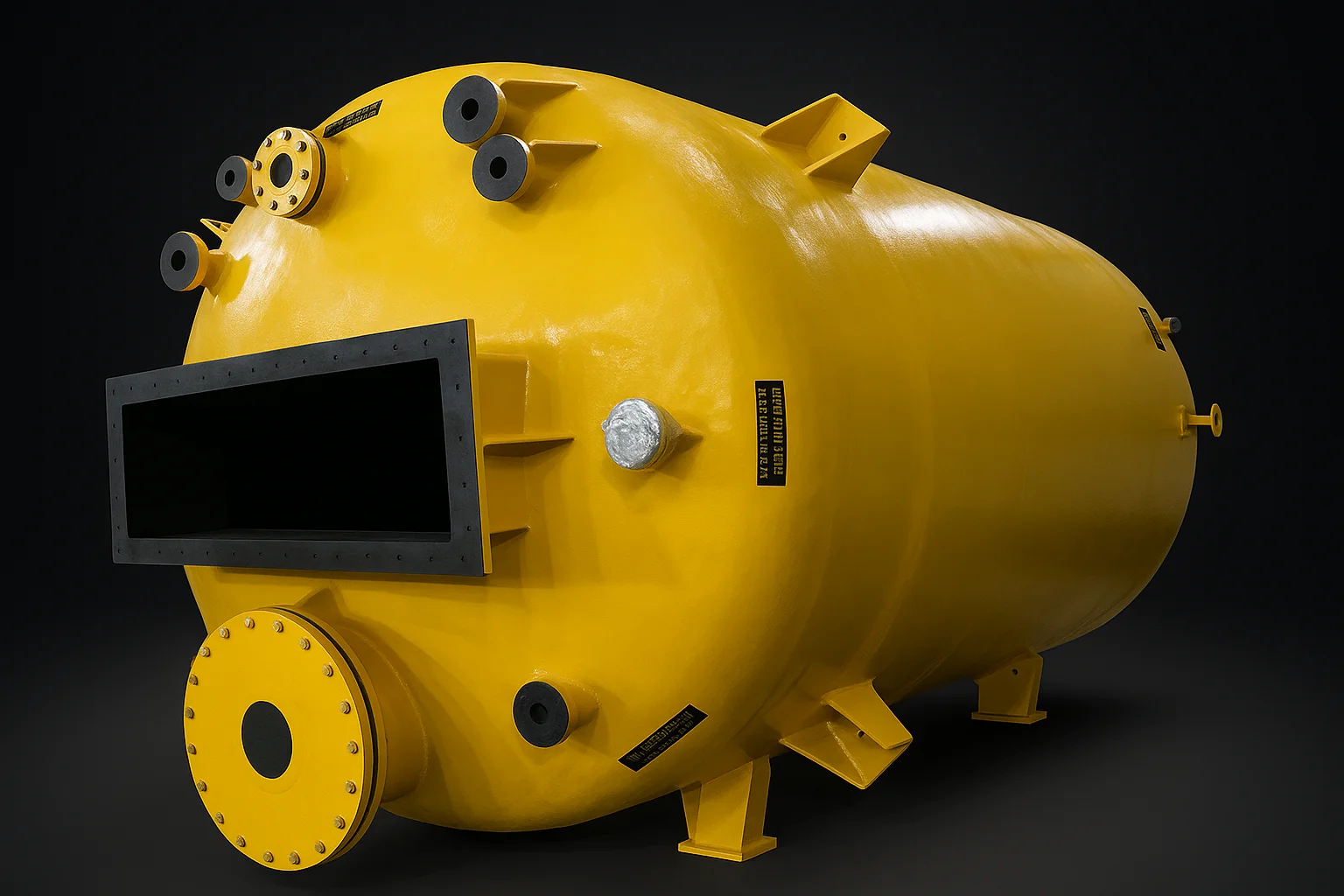
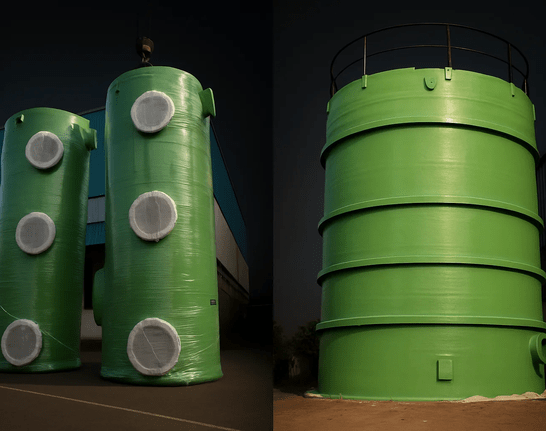
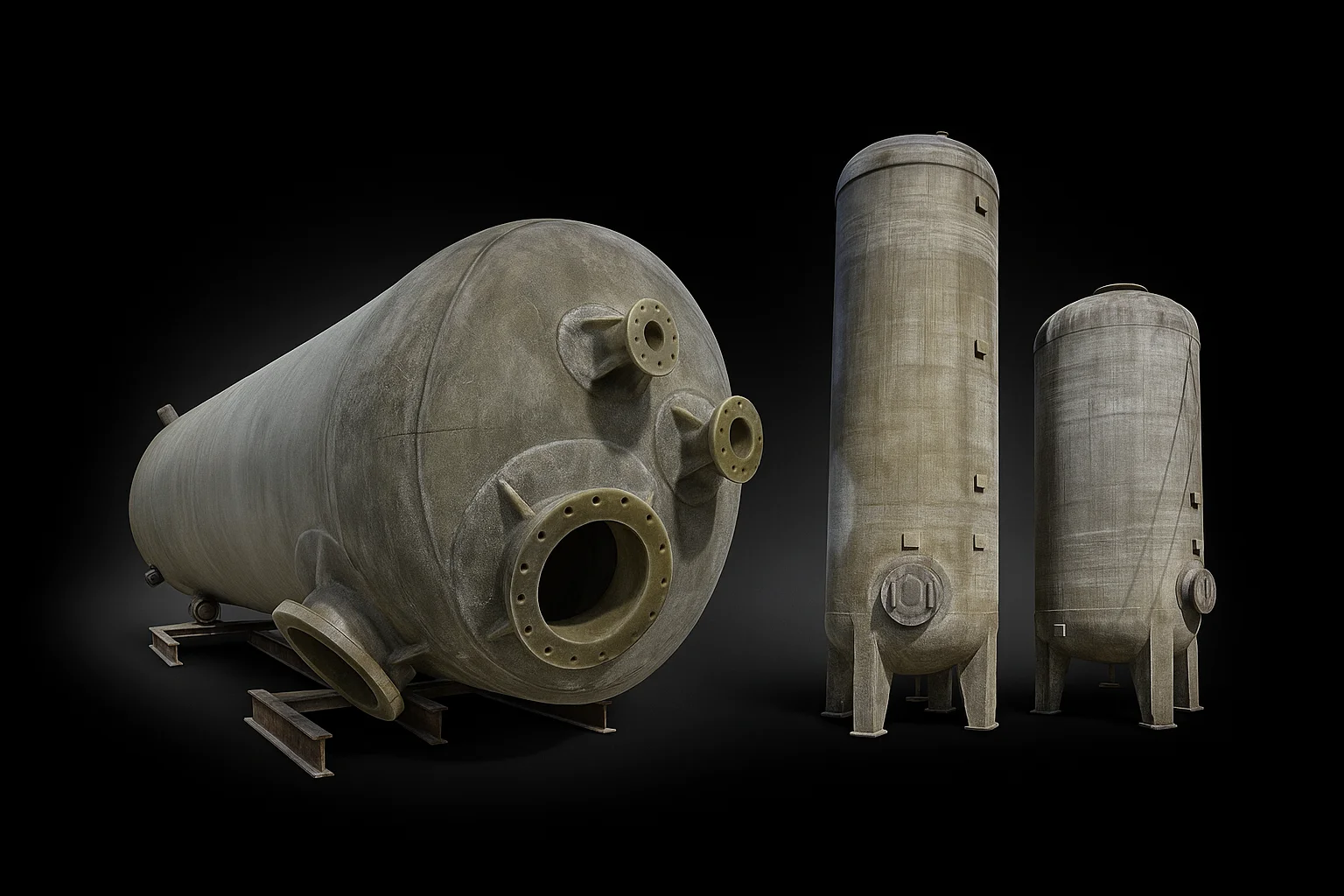
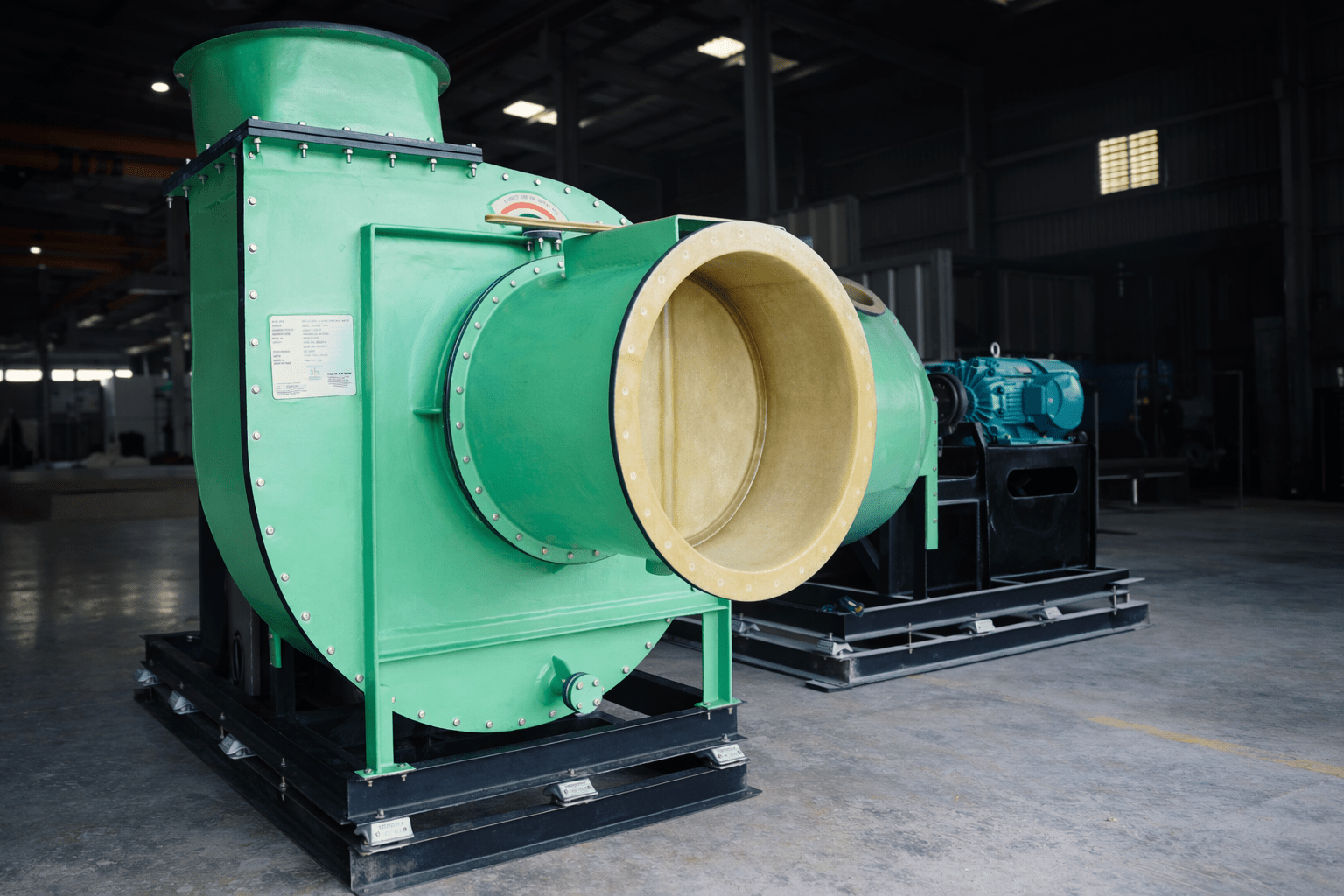
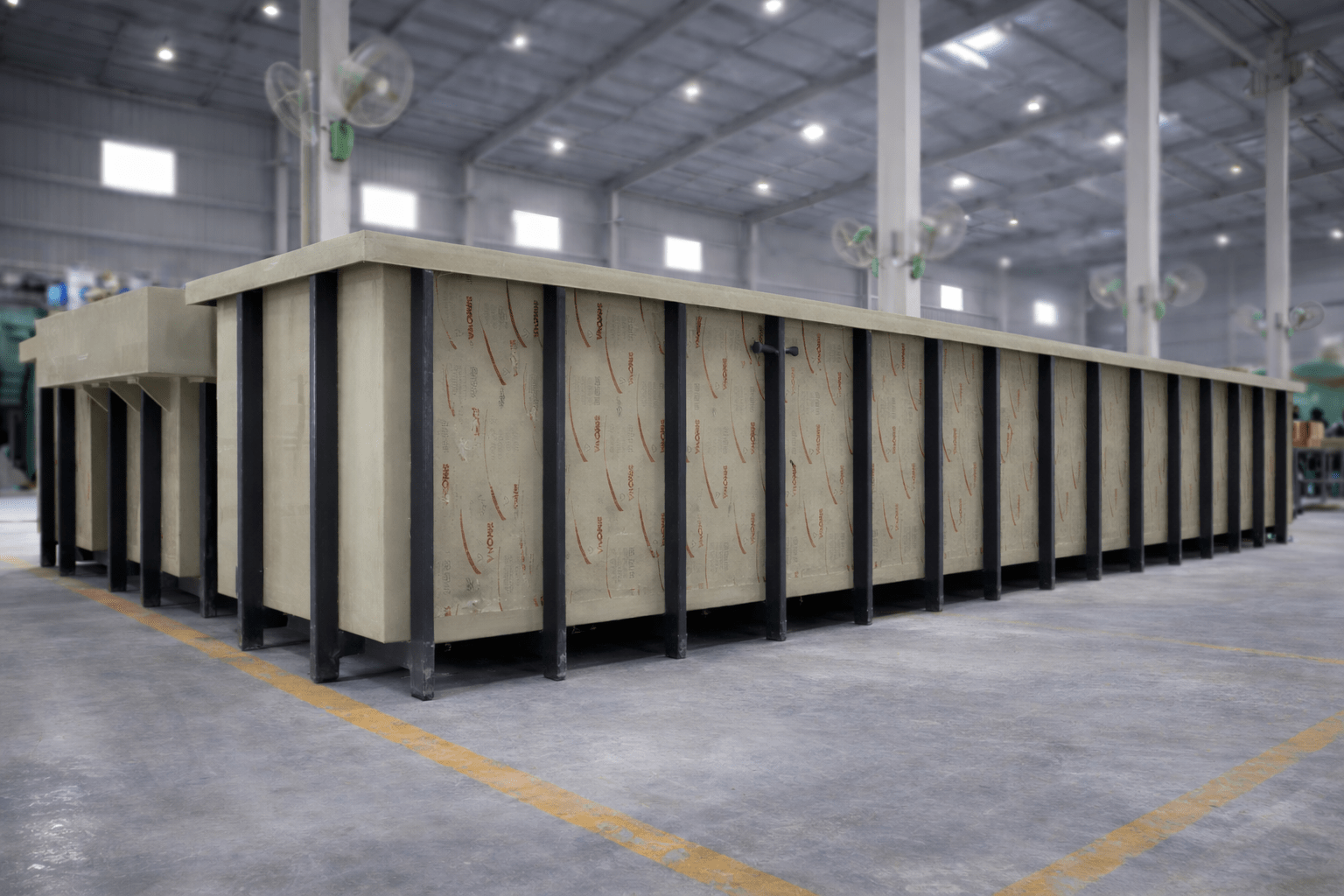
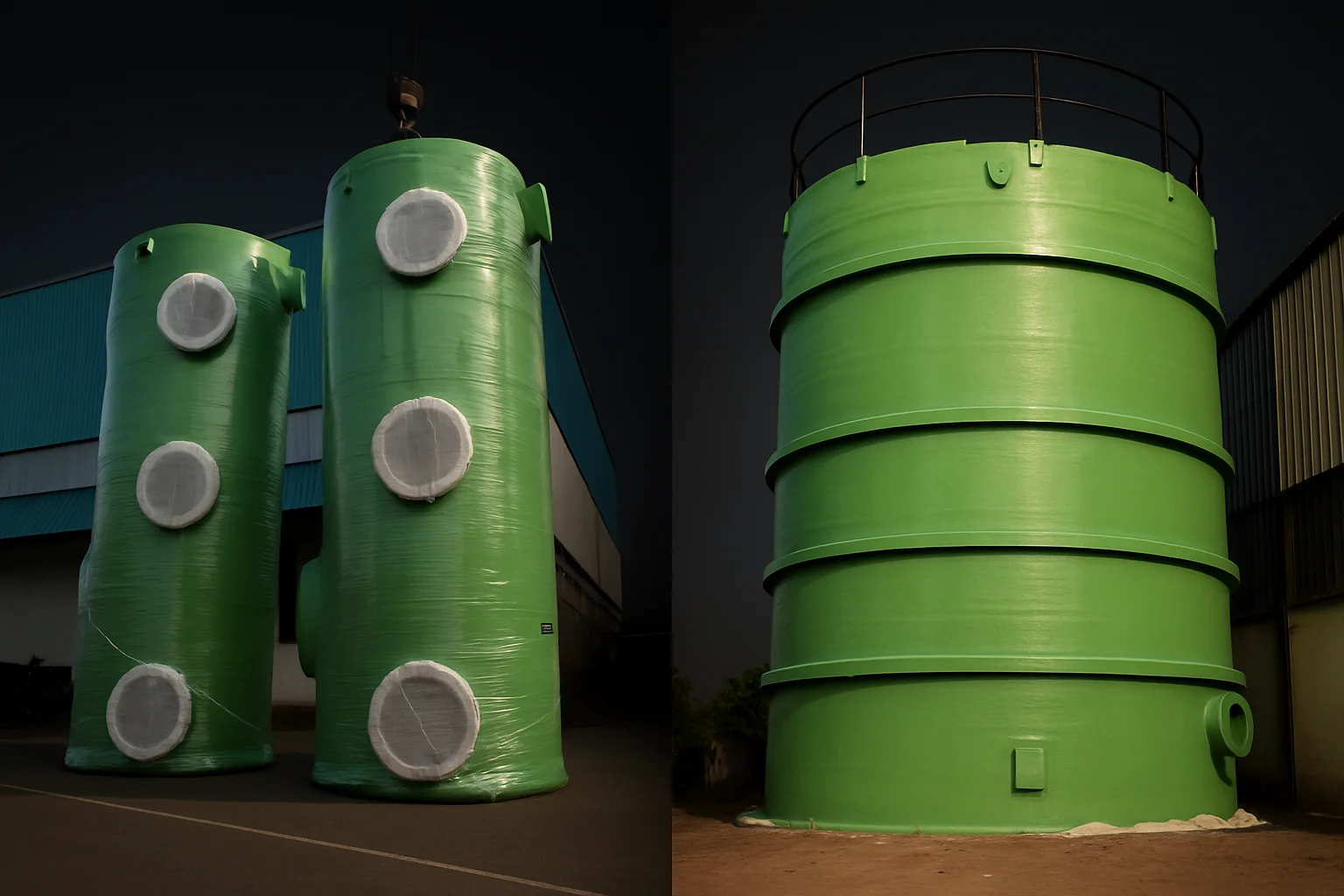
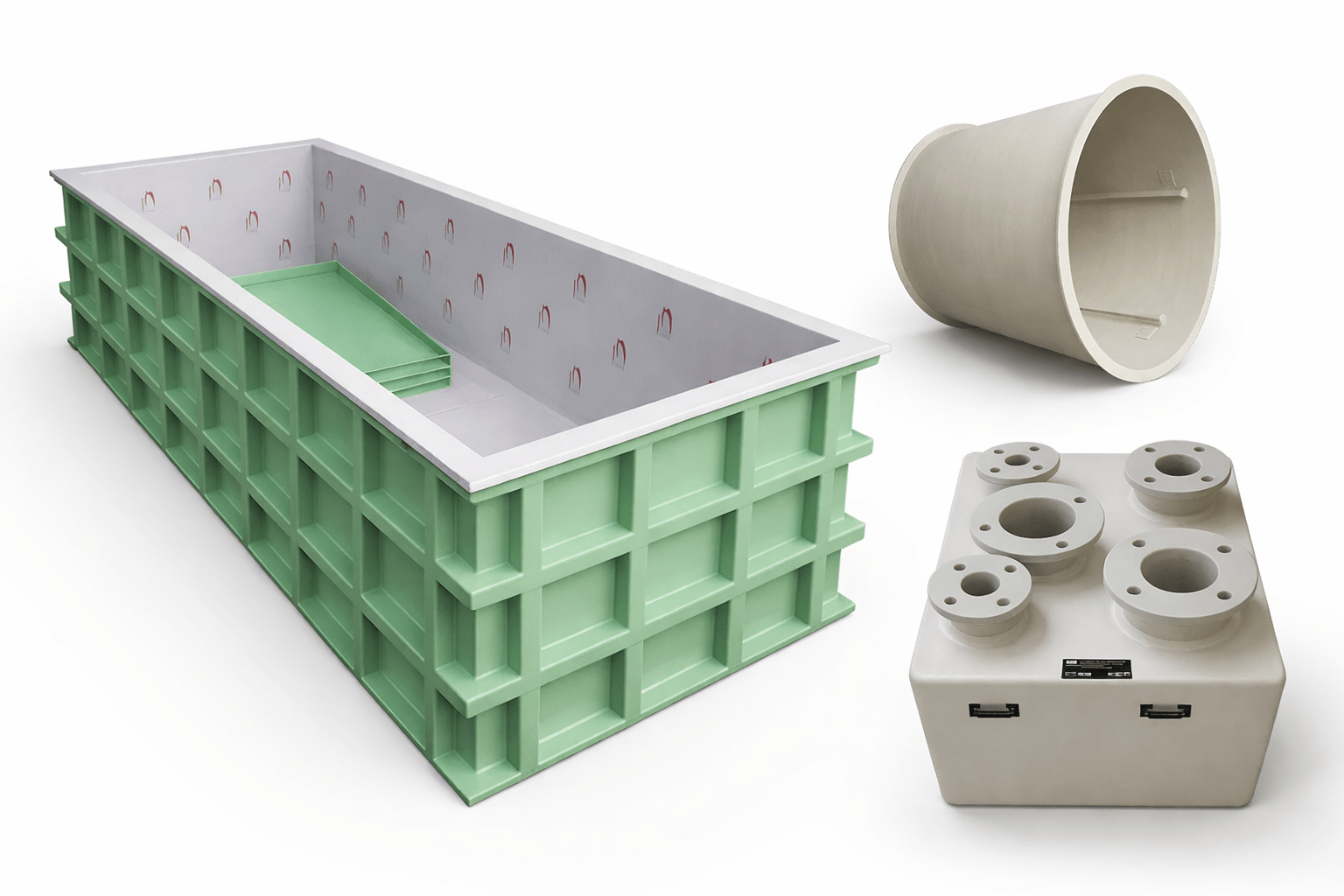
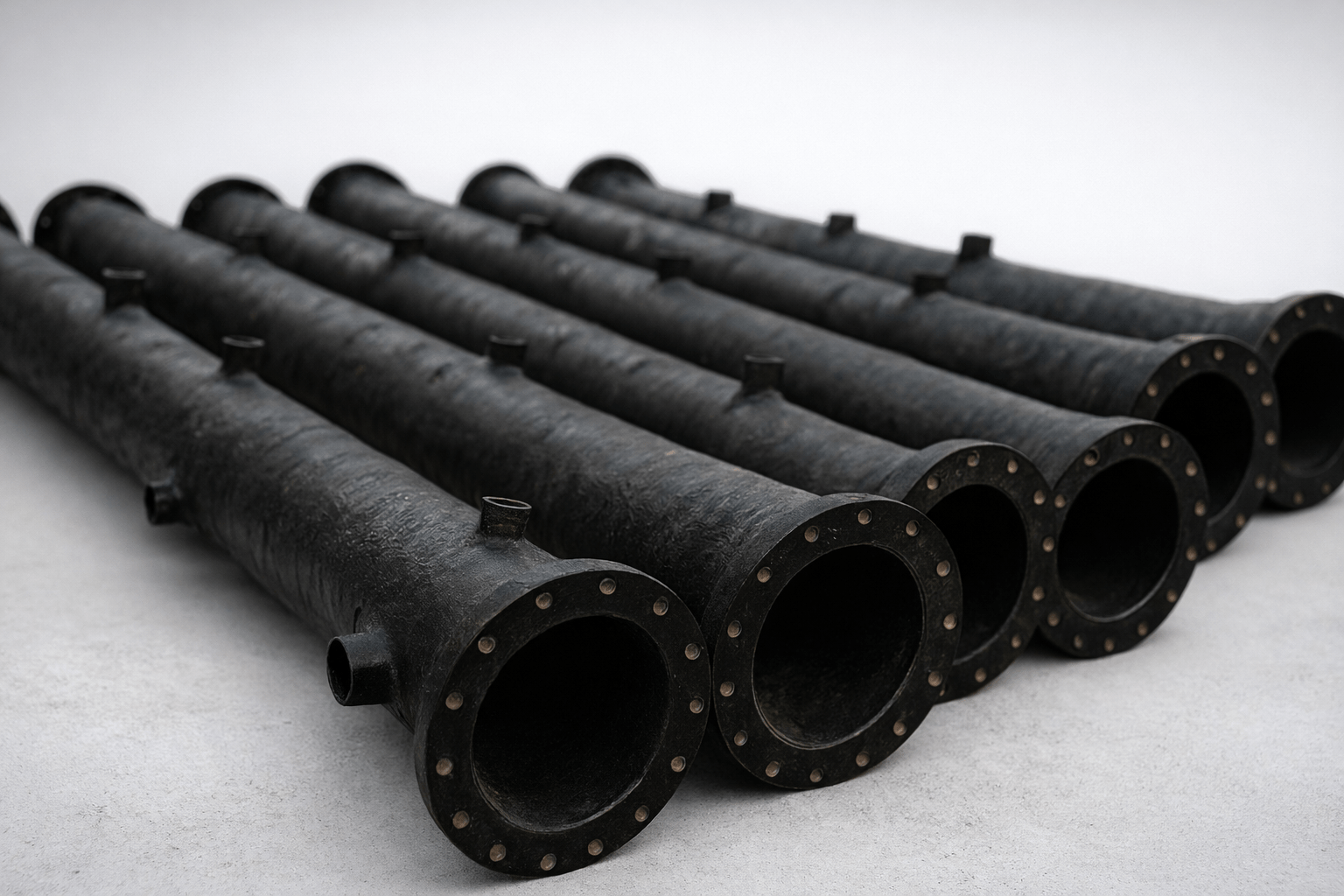
FRP reactors are process vessels designed for controlled chemical reactions involving corrosive or chemically aggressive media. Manufactured with fiber-reinforced plastic and a suitable resin system, they offer corrosion resistance, structural strength and a high strength-to-weight ratio.
The reactor is selected based on chemical compatibility, operating temperature, pressure or vacuum, capacity, reaction time, agitation and nozzle requirements. Proper resin and laminate selection are essential for reliable service.
SH Engitech designs and manufactures customized FRP reactors based on specific process and operating requirements. Reactor configurations can include agitators, baffles, manways, nozzles, supports and other process accessories as required.
The lightweight, non-metallic construction simplifies handling and installation while providing corrosion resistance and electrical insulation where required.
Common Types of FRP Reactors
Batch Reactor:
Used for charging, processing and discharging a defined quantity of material. FRP batch reactors can be configured with agitators, baffles, heating or cooling arrangements and process nozzles.
Continuous Stirred Tank Reactor (CSTR):
Designed for continuous feed and discharge with mechanical agitation for uniform mixing and controlled residence time. Configurations can include agitators, impellers, baffles and instrumentation connections.
Catalytic or Tubular Reactor:
Used for processes where fluids pass through a defined reaction zone containing catalysts, packing or other internals. Where technically suitable, FRP or composite construction can be selected based on chemical, temperature, pressure and mechanical requirements.