
Three materials cover most industrial storage tanks: steel, HDPE and GRP. Each has a place. SH Engitech’s engineering team compares them for chemical storage and explains where a GRP tank is the better choice.
Material
What is a GRP tank?
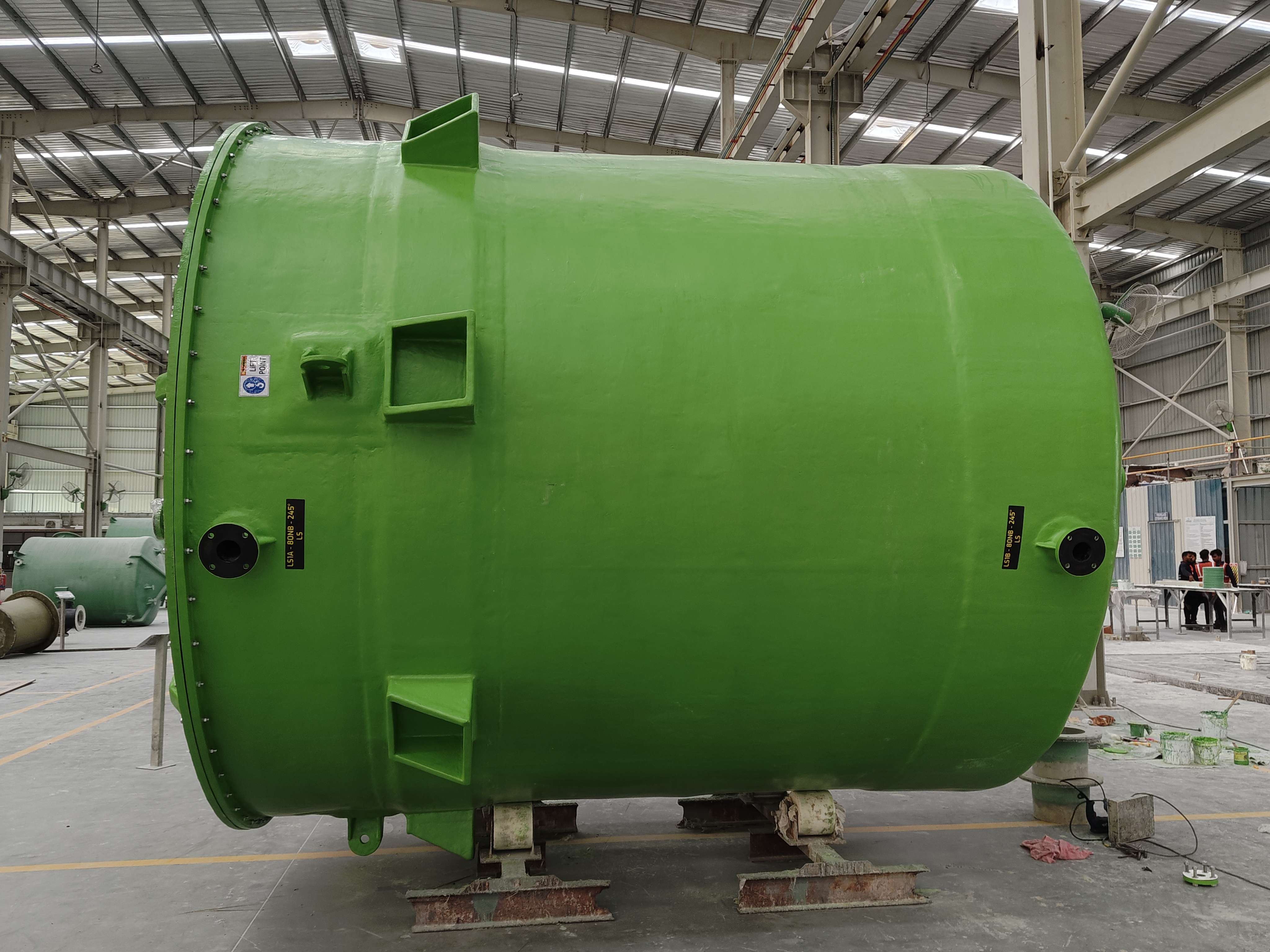
GRP stands for glass-reinforced plastic. It is the same material as FRP (fibre-reinforced plastic): glass fibre set in a resin. The glass fibre gives strength, and the resin gives resistance to corrosion. The two names are used for the same tanks.
Selection
The key points
- Steel is strong but rusts. With chemicals it needs a lining or coating, and regular upkeep.
- HDPE resists chemicals well but is limited in size. Large tanks need support, and temperature limits are lower.
- GRP combines the two. It resists corrosion, can be built large, and is designed for the exact liquid.
Comparison
GRP, steel and HDPE side by side
| Point | GRP tank | Steel tank | HDPE tank |
|---|---|---|---|
| Corrosion | Does not rust; resin chosen for the chemical | Rusts; needs lining or coating | Good chemical resistance |
| Large sizes | Well suited | Well suited | Limited without support |
| Weight | Light | Heavy | Light |
| Upkeep | Low; no repainting | Painting and lining checks | Low |
| Customising | Nozzles, baffles, liners and shapes built in | Possible, with more fabrication | Limited |
These are general comparisons. The right choice always depends on the liquid, its temperature and the size of the tank.
“The question is rarely which material is best. It is which material is right for this liquid at this temperature.”
SH Engitech Engineering Team
Application
When GRP is the better choice
GRP is usually chosen when the liquid is corrosive and the tank is large: acid and alkali storage in chemical plants, process tanks in pharmaceutical and fertiliser plants, and water and effluent treatment. Tanks can be vertical, horizontal or rectangular, with flat or cone bottoms and open or closed tops.
For the most aggressive chemicals, the tank is built as a dual laminate, with a thermoplastic liner inside the GRP.
Standards and testing
What to check before you buy
Ask which standard the tank is designed to. BS EN 13121 and ASTM D 3299 are the recognised standards. Ask how it is tested: every tank should be hydro tested before dispatch. And give the supplier the chemical, its concentration, the temperature and the pressure. At SH Engitech these four inputs are reviewed first, the material of construction is selected, and its compatibility is checked against a database before anything is designed.
Contacto
Need help choosing a tank material?
SH Engitech has manufactured corrosion-resistant process equipment in Vapi, Gujarat, since 1989, for clients worldwide. Tell us the liquid, temperature and capacity, and our engineers will recommend the right tank.
Productos