
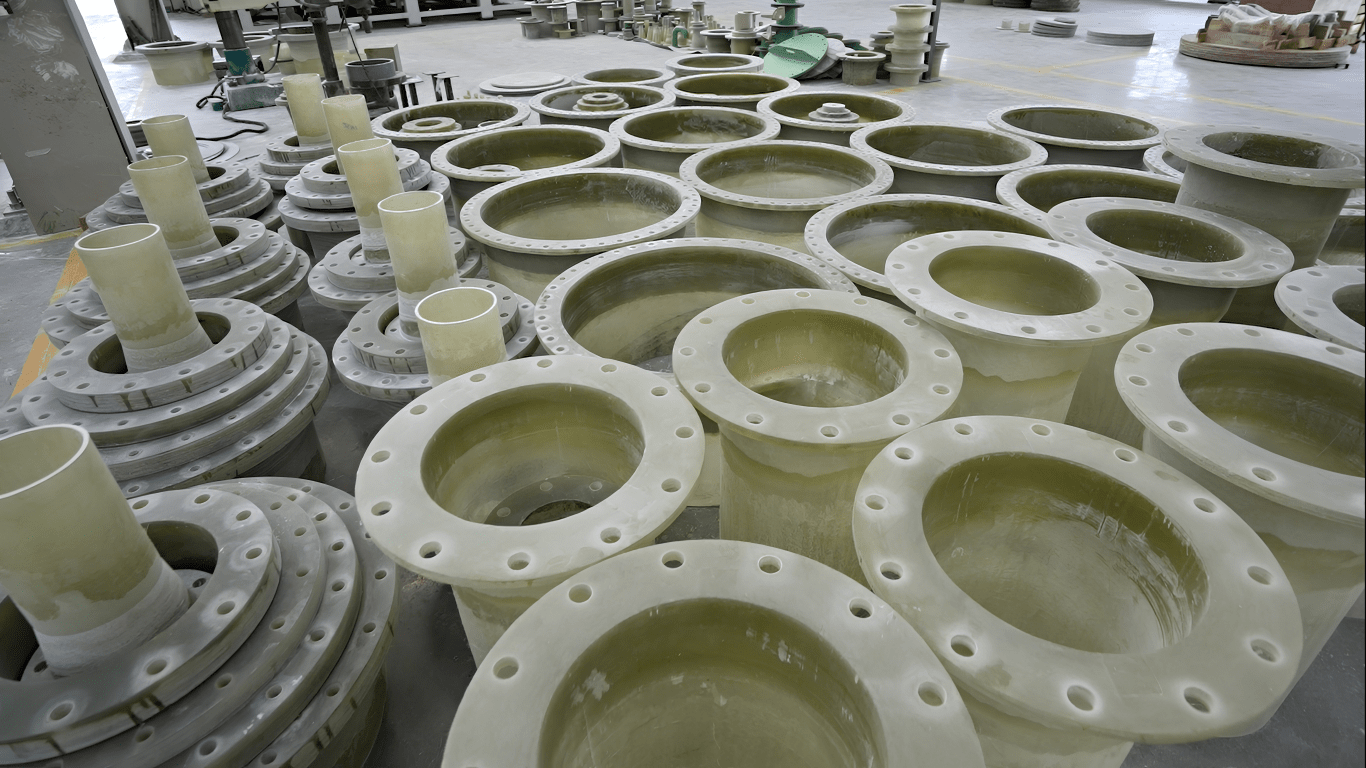
A piping system is only as reliable as its fittings and joints. SH Engitech’s engineering team explains how to choose GRP pipe fittings, the resin they are made with and the way they are joined.
Material
What GRP fittings are
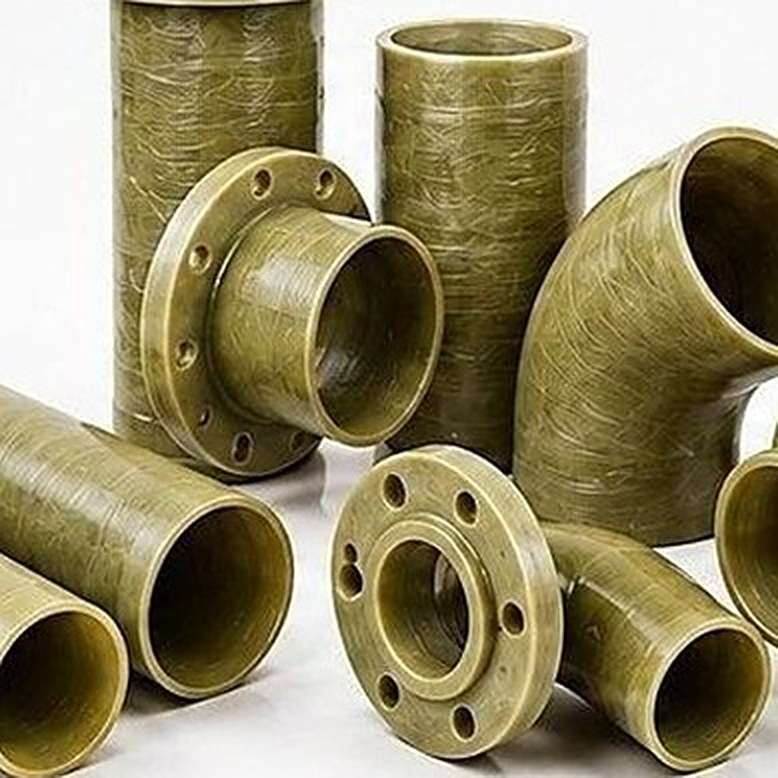
GRP (glass-reinforced plastic, also called FRP) fittings are made from glass fibres in a thermosetting resin. They are corrosion resistant, strong and lightweight, and are used in chemical processing, marine and water treatment service. The usual types are elbows, tees, reducers, couplings, end caps and flanges.
Selection
The key points
- Match the fitting to the pipe. Fittings should be made in the same resin system as the piping.
- Choose the joint for the service. Butt and wrap, flanged and bell and spigot joints each have their place.
- Ask for the standard and the test. BS 7159 and ASTM D2996 are the recognised standards, and fittings should be hydro tested.
Resin
Vinylester, polyester or epoxy
The resin decides what the fitting can carry. Vinylester is used for a wide range of acids and alkalis, polyester for water and milder service, and epoxy where higher strength and temperature are needed. The supplier selects the resin from the fluid, its concentration and its temperature.
Joints
How fittings are joined
| Joint | How it is made | Typical use |
|---|---|---|
| Butt and wrap | Pipe ends are butted together and laminated over | Permanent joints in process piping |
| Flanged | Bolted flanges with a gasket | Connections to equipment, valves and points that are opened |
| Bell and spigot | One end fits inside the other and is bonded or sealed | Faster assembly on longer runs |
“Most piping leaks start at a joint. Choosing the joint, and making it properly on site, deserves as much attention as the pipe.”
SH Engitech Engineering Team
Design
Standard or custom
Standard fittings cover most layouts. Where a project needs an unusual angle, branch or size, fittings are made to the project requirements. Because GRP is light, fittings are easy to install and place less load on the supporting structure.
SH Engitech makes pipes and fittings from 15 mm to 4,000 mm in diameter, in pressure classes from 3 to 15 kg/cm². Fittings follow ASTM D5685 and flanges ASTM D5421 and ASTM D4024.
Service life
Installation and inspection
Support the piping correctly, so that fittings are not carrying loads they were not designed for. Have site joints made by trained people, and inspect joints and flanges at planned shutdowns.
Contacto
Need support with GRP piping?
SH Engitech manufactures FRP/GRP fittings and FRP/GRP piping to BS 7159 and ASTM D2996, hydro tested at works before dispatch, with site jointing support and commissioning for clients worldwide. Tell us the fluid, pressure and temperature, and our engineers will recommend the right system.
Productos