GRP, Steel or HDPE: Which Tank for Chemical Storage?

Three materials cover most industrial storage tanks: steel, HDPE and GRP. Each has a place. SH Engitech’s engineering team compares them for chemical storage and explains where a GRP tank is the better choice.
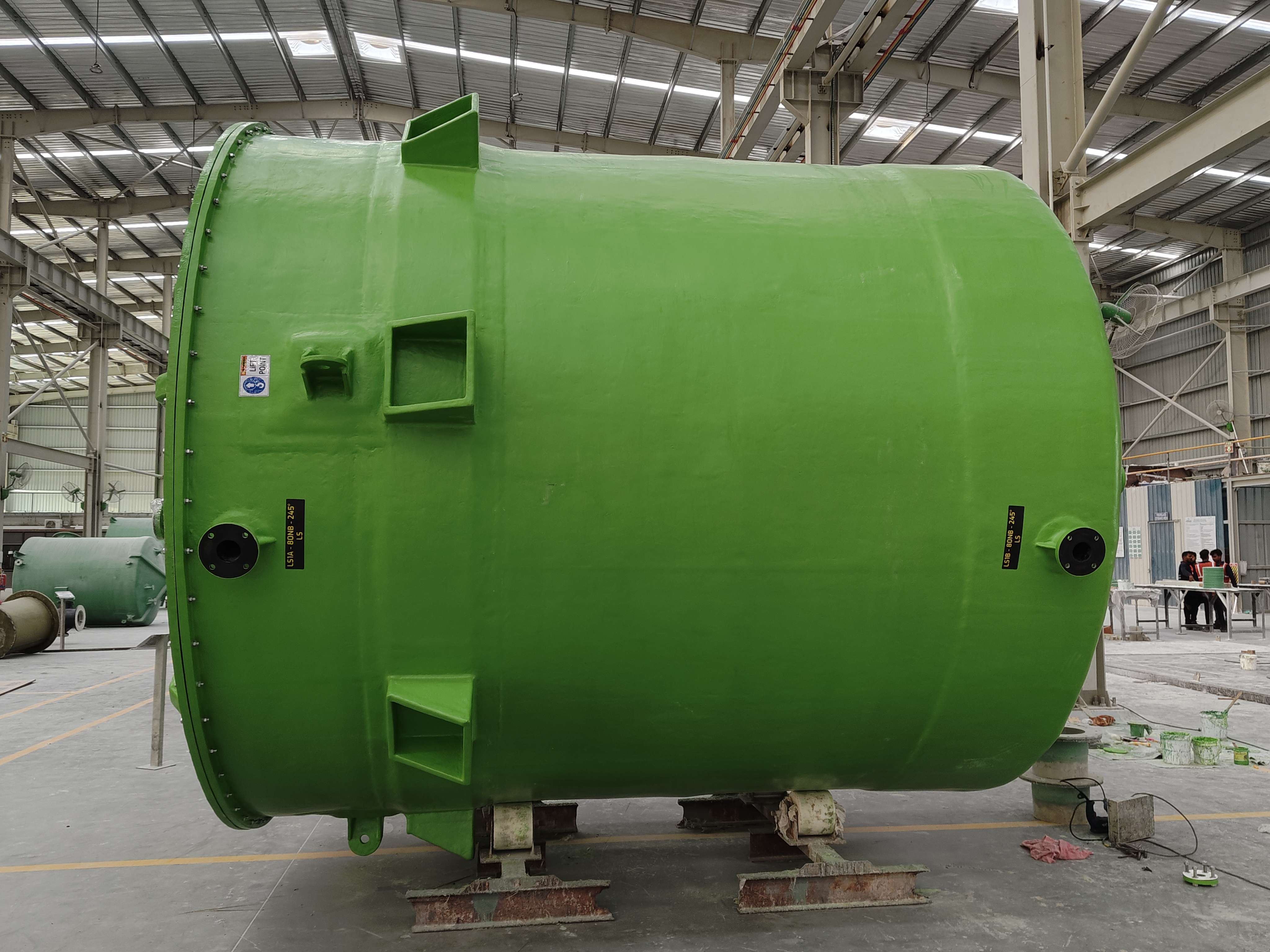
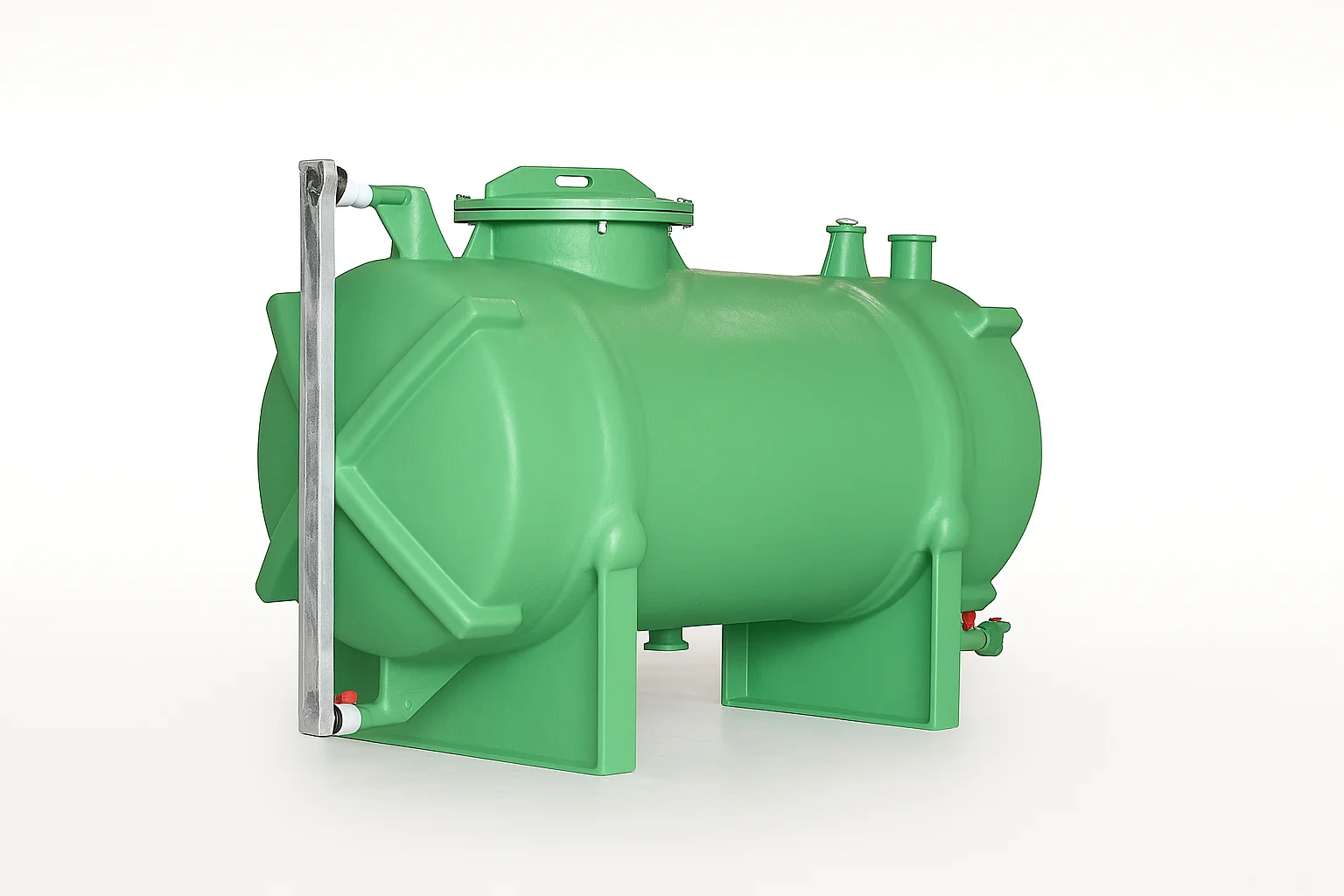
GRP storage tank in the SH Engitech workshop
A GRP storage tank in the SH Engitech workshop.

Material

What is a GRP tank?

GRP stands for glass-reinforced plastic. It is the same material as FRP (fibre-reinforced plastic): glass fibre set in a resin. The glass fibre gives strength, and the resin gives resistance to corrosion. The two names are used for the same tanks.

Selection

The key points

  • Steel is strong but rusts. With chemicals it needs a lining or coating, and regular upkeep.
  • HDPE resists chemicals well but is limited in size. Large tanks need support, and temperature limits are lower.
  • GRP combines the two. It resists corrosion, can be built large, and is designed for the exact liquid.

Comparison

GRP, steel and HDPE side by side

Point GRP tank Steel tank HDPE tank
Corrosion Does not rust; resin chosen for the chemical Rusts; needs lining or coating Good chemical resistance
Large sizes Well suited Well suited Limited without support
Weight Light Heavy Light
Upkeep Low; no repainting Painting and lining checks Low
Customising Nozzles, baffles, liners and shapes built in Possible, with more fabrication Limited

These are general comparisons. The right choice always depends on the liquid, its temperature and the size of the tank.

“The question is rarely which material is best. It is which material is right for this liquid at this temperature.”
SH Engitech Engineering Team

Application

When GRP is the better choice

GRP is usually chosen when the liquid is corrosive and the tank is large: acid and alkali storage in chemical plants, process tanks in pharmaceutical and fertiliser plants, and water and effluent treatment. Tanks can be vertical, horizontal or rectangular, with flat or cone bottoms and open or closed tops.

For the most aggressive chemicals, the tank is built as a dual laminate, with a thermoplastic liner inside the GRP.

Standards and testing

What to check before you buy

Ask which standard the tank is designed to. BS EN 13121 and ASTM D 3299 are the recognised standards. Ask how it is tested: every tank should be hydro tested before dispatch. And give the supplier the chemical, its concentration, the temperature and the pressure. At SH Engitech these four inputs are reviewed first, the material of construction is selected, and its compatibility is checked against a database before anything is designed.

Contacto

Need help choosing a tank material?

SH Engitech has manufactured corrosion-resistant process equipment in Vapi, Gujarat, since 1989, for clients worldwide. Tell us the liquid, temperature and capacity, and our engineers will recommend the right tank.

Contact an SH Engitech expert

Productos

Related products

Tanques de Almacenamiento de FRP →
Equipo de PRFV Doblaminado →
Recipientes de presión de FRP →
Tanques de decapado →

Articles

Related articles

How to choose an FRP tank for chemical storage →

How to choose an industrial pickling tank →

How to Select an FRP Blower for Corrosive Fumes

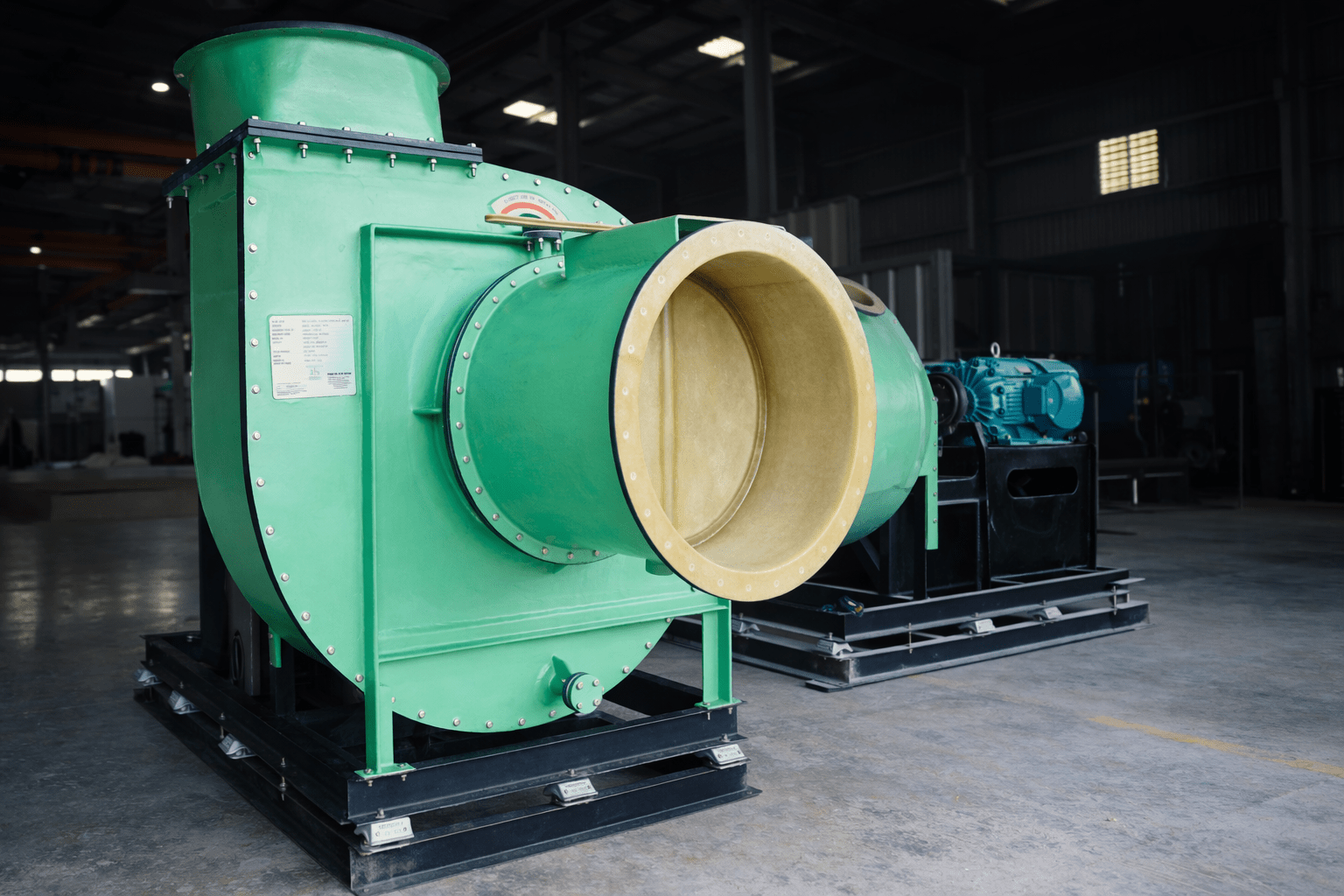
Metal fans corrode quickly in acid fumes. An FRP centrifugal blower keeps a fume extraction or scrubber system running, provided it is selected for the right airflow and pressure. SH Engitech’s engineering team explains how.

FRP centrifugal blower for corrosive fumes – SH Engitech
An FRP centrifugal blower for corrosive fumes and gases.

Principle

How a centrifugal blower works

A revolving impeller draws air or gas to its centre and pushes it out through the outlet. This gives a high and stable airflow, which is what fume extraction and scrubber duty need. The main components are the impeller, the casing and the drive.

In an FRP blower, the parts that touch the gas are made of fibre-reinforced plastic, so acidic and corrosive gas streams do not attack them.

Selection

The key points

  • Start with airflow and pressure. The blower is selected where the system needs meet the blower curve.
  • Choose the impeller for the duty. Radial, backward-curved and forward-curved blades behave differently.
  • Match the resin to the gas. The resin system is chosen for the fumes being handled.

Selection

Airflow, pressure and the blower curve

Every duct, hood and scrubber in a system resists the flow of air. The blower has to deliver the required airflow against that resistance. A blower is designed to an airflow and a duty. A blower that is too small will not clear the fumes. One that is too large wastes energy and can cause noise and vibration.

For an accurate selection, the supplier needs the gas, its temperature, the airflow required and the system pressure.

Design

Impeller and drive options

Choice Options
Impeller blades Radial, backward-curved or forward-curved
Drive Direct drive or belt drive
Construction FRP, with a resin system chosen for the gas

“A blower is only as good as its selection. Airflow and pressure come first, everything else follows.”
SH Engitech Engineering Team

Application

Where FRP blowers are used

  • Fume extraction from tanques de decapado, process tanks and vessels
  • Scrubber and absorption systems, as part of a complete scrubbing system
  • Ventilation, drying and dust control

Service life

Keeping a blower running

Check the impeller regularly for build-up, which upsets the balance and causes vibration. Inspect bearings and belts at planned intervals, and listen for changes in noise. Keep the blower within the temperature and gas it was designed for.

Contacto

Need support with fume extraction?

SH Engitech builds FRP centrifugal blowers in-house, with the impeller and drive selected to suit the required airflow and pressure. SH Engitech has manufactured corrosion-resistant process equipment in Vapi, Gujarat, since 1989, for clients worldwide. Tell us the gas, airflow and pressure, and our engineers will recommend the right blower.

Contact an SH Engitech expert

Productos

Related products

Sopladores Centrífugos de FRP →
Sistemas de lavado →
Tanques de decapado →
FRP/GRP Piping →

Articles

Related articles

How to choose an industrial pickling tank →

How to choose an industrial scrubber →

La Guía Definitiva sobre Interiores de Columnas: Tipos, Beneficios y Aplicaciones

In the world of chemical processing and industrial engineering, column internals play a crucial role in the efficiency and effectiveness of separation processes. This comprehensive guide explores the different types of column internals, their benefits, and their wide range of applications. Whether you’re in the petrochemical industry, wastewater treatment, or pharmaceutical manufacturing, understanding column internals is essential for optimizing your operations.

What Are Column Internals?

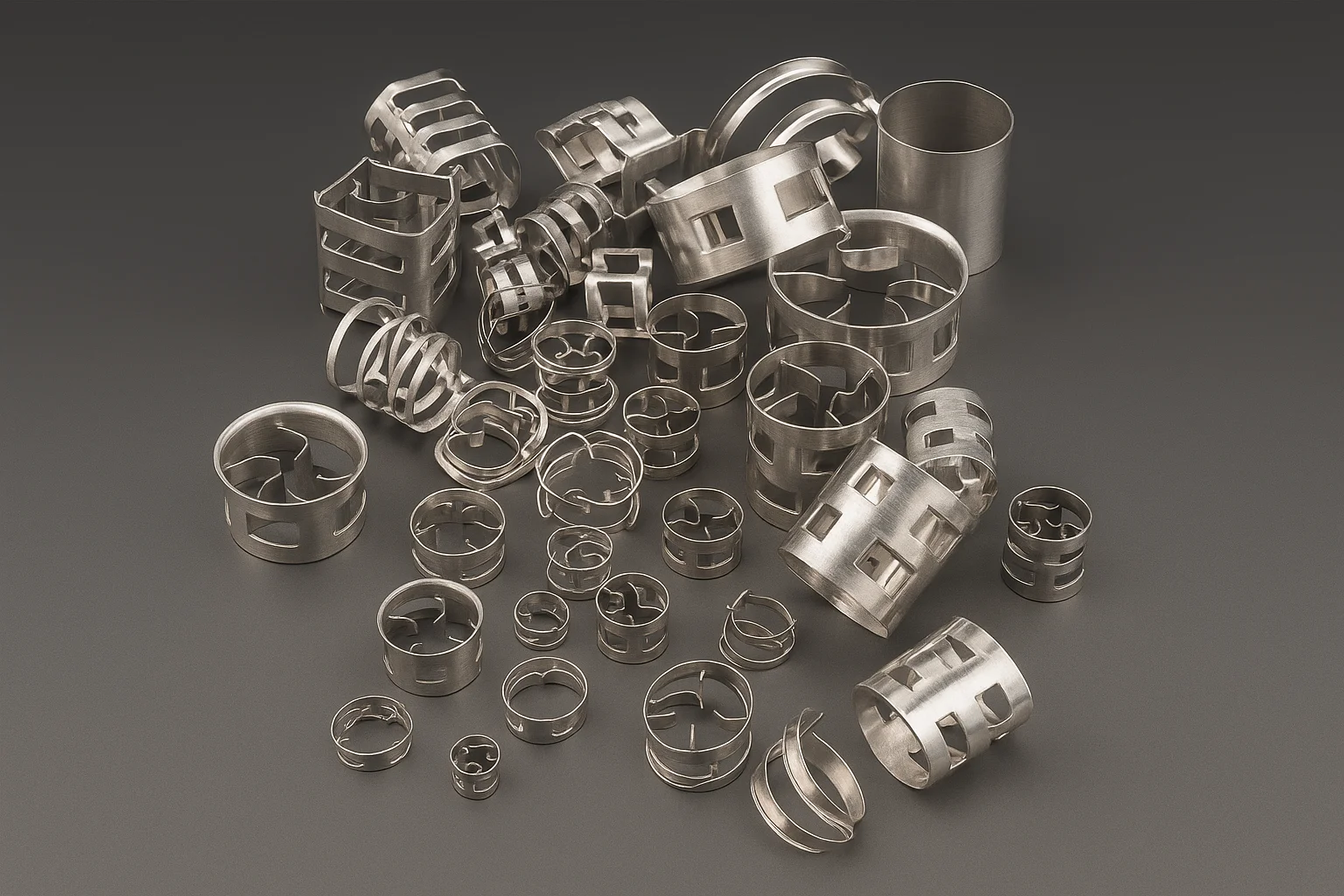
Column internals are the components within a distillation or absorption column that facilitate the contact between liquid and vapor phases. These components are designed to maximize mass transfer efficiency and ensure proper mixing and separation of the different phases. Common column internals include trays, packing, distributors, collectors, and support plates, each serving a specific function to enhance the column’s performance.

Types of Column Internals

  1. Trays

    Trays are horizontal plates with openings that allow vapor to rise and liquid to flow across. The most common types of trays include:

    • Bubble Cap Trays: Feature caps with slots that allow vapor to bubble through the liquid, promoting contact and separation.
    • Sieve Trays: Have perforations that enable vapor to pass through while liquid flows across the tray.
    • Valve Trays: Equipped with movable valves that lift to allow vapor flow, adjusting based on the vapor rate.
  2. Packing

    Packing materials provide a large surface area for vapor-liquid contact. They are generally categorized into two types:

    • Random Packing: Consists of small, randomly packed shapes such as rings, saddles, or spheres.
    • Structured Packing: Arranged in a regular, geometric pattern to maximize surface area and efficiency.
  3. Distributors

    Liquid and vapor distributors ensure even distribution of fluids across the column. Types include:

    • Liquid Distributors: Spread liquid evenly over the packing or trays, preventing channeling and ensuring uniform contact.
    • Vapor Distributors: Disperse vapor evenly, enhancing mass transfer and column efficiency.
  4. Collectors

    Collectors gather liquid from one section of the column and direct it to another, maintaining proper flow and separation. Types include:

    • Liquid Collectors: Collect liquid from the packing or trays and guide it to the next section.
    • Vapor Collectors: Capture vapor and direct it to subsequent stages for further processing.
  5. Support Plates

    Support plates hold the packing or trays in place and provide structural integrity to the column. They are essential for maintaining the proper alignment and performance of the column internals.

Key Benefits of Column Internals

  1. Improved Separation Efficiency
    Column internals enhance the contact between vapor and liquid phases, increasing mass transfer efficiency. This results in better separation of components, higher product purity, and improved overall process efficiency.
  2. Reduced Pressure Drop
    Efficiently designed column internals minimize pressure drop across the column, reducing energy consumption and operational costs. This is particularly important in large-scale industrial processes where energy efficiency is a priority.
  3. Increased Capacity
    By optimizing the distribution and contact between phases, column internals can increase the capacity of a column. This allows for higher throughput and greater productivity without the need for larger equipment.
  4. Enhanced Flexibility
    Modern column internals are designed to accommodate a wide range of operating conditions and process requirements. This flexibility makes it easier to adapt to changes in feed composition, flow rates, and other process variables.
  5. Lower Maintenance Costs
    High-quality column internals are durable and require less frequent maintenance. This reduces downtime and maintenance costs, ensuring continuous and reliable operation of the column.

Common Applications of Column Internals

  1. Industria petroquímica
    In the petrochemical industry, column internals are used in distillation columns to separate crude oil into various fractions such as gasoline, diesel, and jet fuel. The efficiency and capacity of these columns are critical for maximizing production and profitability.
  2. Procesamiento Químico
    Column internals are essential in chemical processing for the purification and separation of chemical compounds. They are used in processes such as distillation, absorption, and extraction to achieve high-purity products.
  3. Pharmaceutical Manufacturing
    In pharmaceutical manufacturing, column internals play a key role in the production of active pharmaceutical ingredients (APIs) and other compounds. Precise separation and purification are crucial for meeting stringent quality standards.
  4. Industria de Alimentos y Bebidas
    The food and beverage industry utilizes column internals for processes such as distillation, fermentation, and extraction. These applications require efficient separation and purification to ensure product quality and safety.
  5. Tratamiento de aguas residuales
    Column internals are used in wastewater treatment plants for the removal of contaminants and pollutants from water. They enhance the efficiency of processes such as stripping and adsorption, ensuring effective treatment and compliance with environmental regulations.

Maintenance Tips for Column Internals

Proper maintenance of column internals is essential for ensuring optimal performance and longevity. Here are some maintenance tips:

  1. Inspecciones regulares
    Conduct regular inspections to check for signs of wear, corrosion, or damage. Early detection of issues can prevent costly repairs and downtime.
  2. Cleaning and Removal of Deposits
    Over time, deposits can accumulate on column internals, reducing efficiency. Regular cleaning and removal of these deposits are necessary to maintain optimal performance.
  3. Replacement of Worn Components
    Replace any worn or damaged components promptly to prevent further damage and ensure continuous operation. Keep an inventory of spare parts to minimize downtime.
  4. Monitoreo de rendimiento
    Regularly monitor the performance of the column to identify any deviations from normal operation. Changes in pressure drop, flow rates, or product quality can indicate issues with column internals.
  5. Servicio Profesional
    Engage professional services for routine maintenance and repairs. Experienced technicians can provide thorough inspections and necessary repairs, ensuring the column internals remain in top condition.

Why Choose High-Quality Column Internals?

Investing in high-quality column internals is crucial for optimizing your separation processes and ensuring reliable operation. High-quality internals offer superior performance, durability, and efficiency, leading to cost savings and improved productivity. By choosing the right column internals for your specific application, you can enhance your process efficiency, reduce maintenance costs, and achieve higher product quality.

Conclusión

In conclusion, column internals are vital components in industrial separation processes. Understanding the different types, benefits, and applications of column internals can help businesses make informed decisions and optimize their operations. Whether you are in the petrochemical industry, pharmaceutical manufacturing, or wastewater treatment, investing in high-quality column internals is essential for achieving efficient and reliable performance.

Explore the advantages of column internals today and discover how they can enhance your industrial processes. With their proven performance and versatility, column internals are the future of efficient and effective separation solutions.

Storing and Handling Bromine: How to Choose Tank Materials

Bromine is one of the most corrosive chemicals handled in industry. Tanks and equipment for bromine and bromide streams have to be chosen with care. SH Engitech’s engineering team explains what matters.

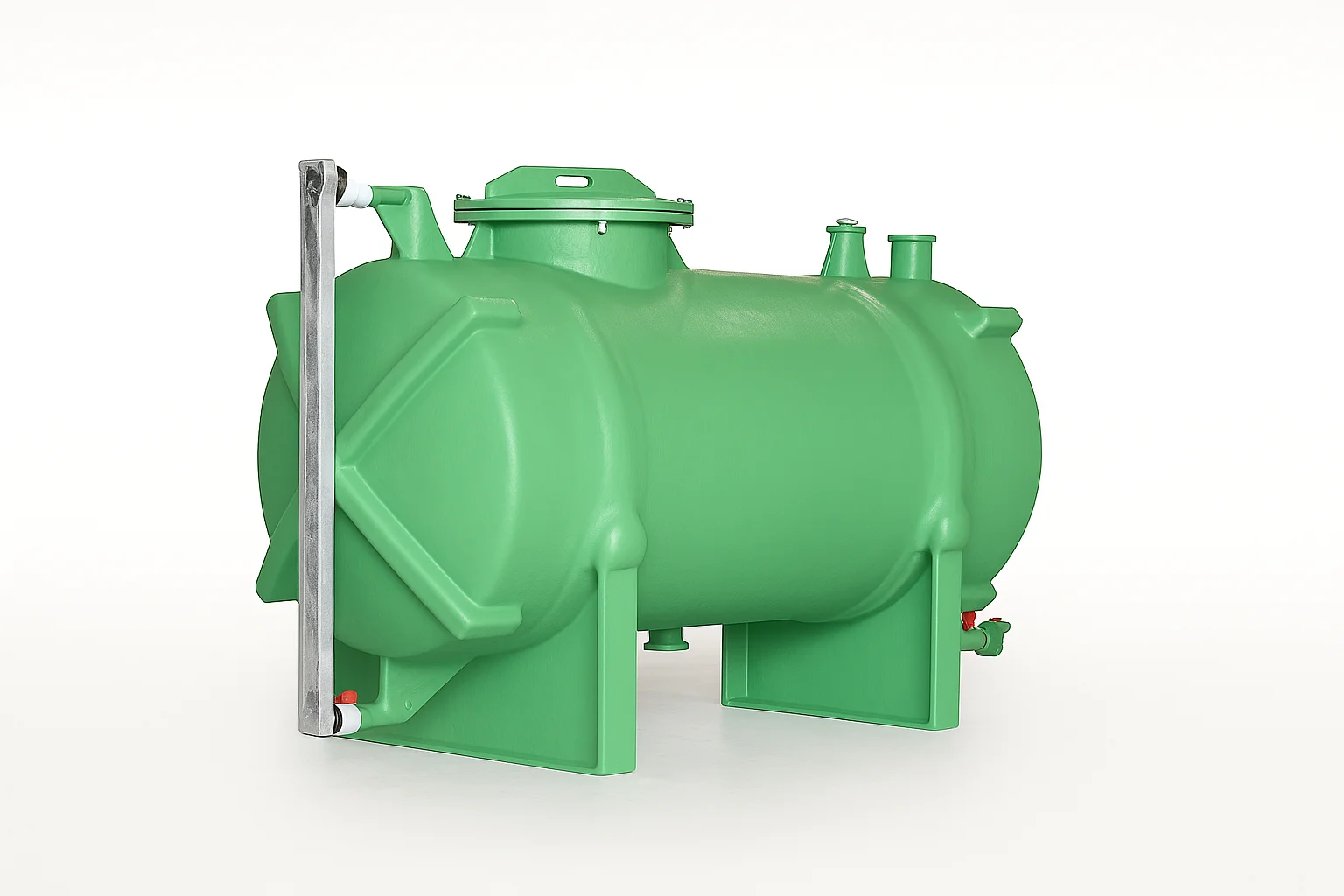
Horizontal storage tank for corrosive chemicals – SH Engitech
A horizontal storage tank. Tanks and vessels in bromine service are built in corrosion-resistant materials.

Chemistry

Why bromine is demanding

Bromine is a heavy, volatile liquid that attacks most common metals and gives off corrosive vapour. Plants also handle related streams such as aqueous HBr, NaBr and KBr solutions, each with its own behaviour. A tank that suits one of these may not suit another.

Selection

The key points

  • Know the exact stream. Liquid bromine, HBr and bromide solutions need different materials.
  • Let the chemistry choose the material. FRP, PPH, PVDF and dual laminate are selected for the stream and temperature.
  • Control the vapour. Vents should lead to a scrubber, not to the open air.

Material

Choosing the tank material

For bromine and bromide service, tanks and vessels are built in FRP, PPH, PVDF or dual laminate, with the material selected for the chemistry. In a dual laminate tank, a thermoplastic liner resists the chemical and the FRP outside carries the load.

Always give the supplier the exact stream, its concentration and its temperature. Material selection for bromine service should be confirmed by the manufacturer for each case.

At SH Engitech, every enquiry starts with four inputs: the chemical, its concentration, the temperature and the pressure. The material of construction is selected against the actual service, then checked against compatibility data before anything is designed.

“With bromine, material selection is not a detail. It is the design.”
SH Engitech Engineering Team

Safety

Vapour control and containment

Bromine vapour is harmful and corrosive, so storage tanks are normally closed, and their vents are led to a tail-gas scrubber that removes residual bromine before the air is released. Nozzles, gaskets and piping need the same care in material selection as the tank itself.

Recovery

Recovering bromine from bromide streams

Many plants do not only store bromine, they recover it. A bromine recovery system converts the bromide in aqueous HBr, NaBr or KBr streams, strips the bromine with steam, then condenses and separates it. Storage tanks, vessels and piping in corrosion-resistant materials are part of every such system.

Service life

Inspection

Inspect tanks, nozzles and gaskets at planned shutdowns, and spark test liners to find pinholes early. Do not change the stream or the temperature without checking with the manufacturer.

Contacto

Handling bromine or bromide streams?

SH Engitech designs and supplies bromine recovery systems on a turnkey basis and builds the tanks, vessels and piping that go with them, for clients worldwide. Tell us your stream, concentration and flow rate, and our engineers will recommend the right design.

Contact an SH Engitech expert

Productos

Related products

Sistemas de Recuperación de Bromo →
Equipo de PRFV Doblaminado →
Tanques de Almacenamiento de FRP →
Sistemas de lavado →

Articles

Related articles

How to choose an FRP tank for chemical storage →

How to choose an industrial scrubber →