
An FRP tank can store acids, alkalis and wastewater for many years without rusting, but only if it is designed for the liquid inside it. SH Engitech’s engineering team explains the four decisions that matter most: the resin, the wall construction, the design standard and the testing.
Material
Why FRP is used for corrosive liquids
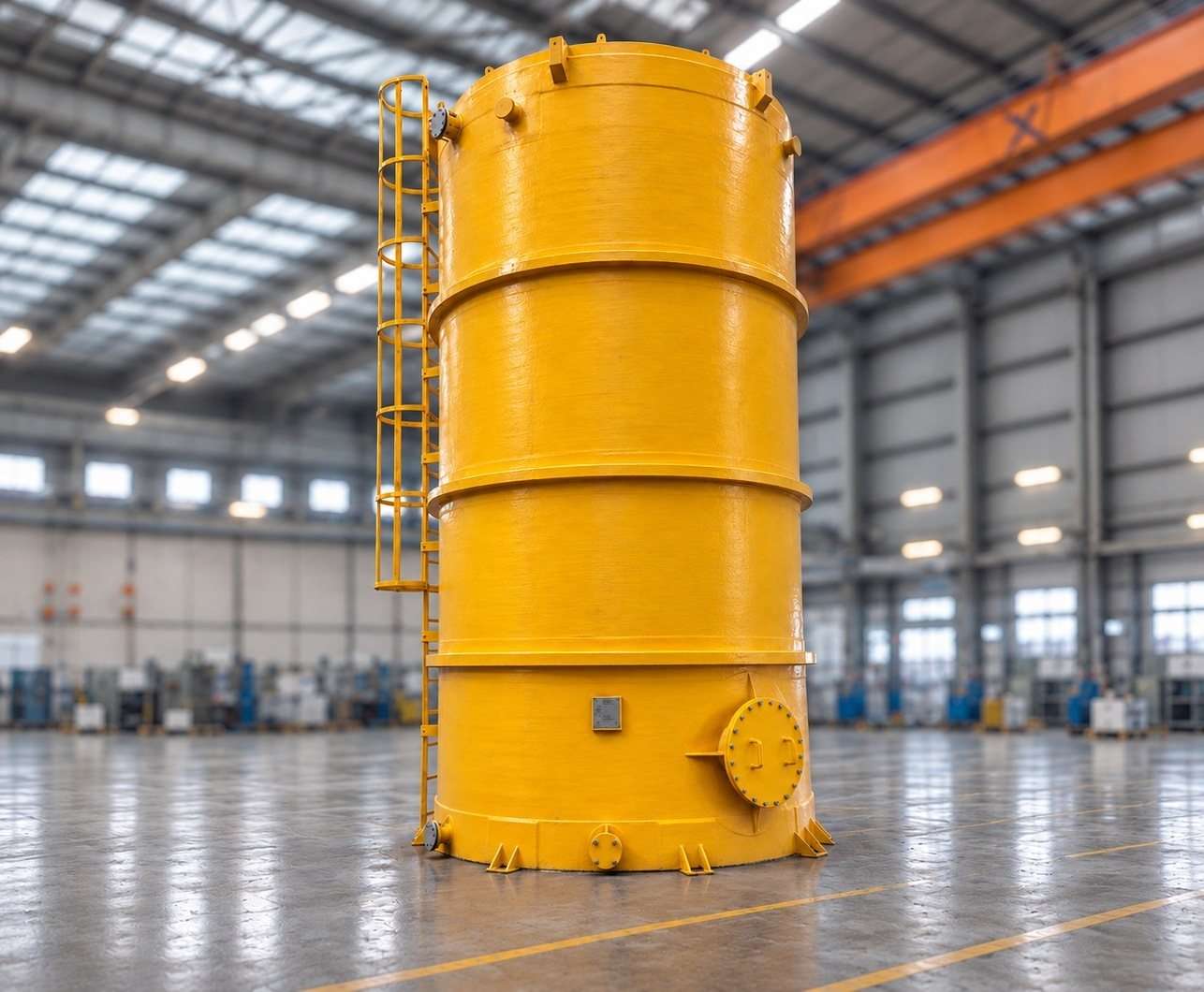
FRP (fibre-reinforced plastic, also called GRP or fibreglass) is made from glass fibre set in a resin. The glass fibre gives the tank its strength. The resin binds the fibres into a hard structure that does not rust.
Steel tanks need lining or regular repainting when they hold chemicals, and plain plastic tanks are limited in size. FRP sits between the two: it resists corrosion like plastic, is strong enough for large tanks, and is light to transport and install.
Selection
The key points
- Start with the liquid. The chemical, its strength and its temperature decide the resin.
- Look at the wall, not only the price. A proper corrosion barrier is what protects the structural layers.
- Ask for a standard and a test. A tank designed to a recognised standard and hydro tested before dispatch gives far fewer surprises on site.
Resin
The resin decides the chemical resistance
The inner layer of the tank, the corrosion barrier, is rich in resin and faces the liquid. Choosing the right resin for that layer is the single most important decision.
| Resin | Typical use |
|---|---|
| Isophthalic | Water and mildly corrosive liquids |
| Vinylester and superior vinylester | A wide range of acids and alkalis |
| Bisphenol and novolac | Stronger chemicals and higher temperatures |
| FR-grade vinylester | Where fire retardance is required |
When a chemical is too aggressive for resin alone, the tank is built as a dual laminate. A thermoplastic liner such as PPH, PVC, CPVC, PVDF, PTFE, ECTFE or PFA resists the chemical, and the FRP outside carries the load.
“Most early tank failures we see come from one cause: the tank was not designed for the chemical it ended up holding.”
SH Engitech Engineering Team
Construction
How the tank wall is built
A well-made FRP tank wall has separate layers. Where needed, a thermoplastic liner comes first. Behind it is the corrosion barrier, then the structural FRP that carries the weight of the liquid, and finally a UV-stable topcoat that protects the tank outdoors.
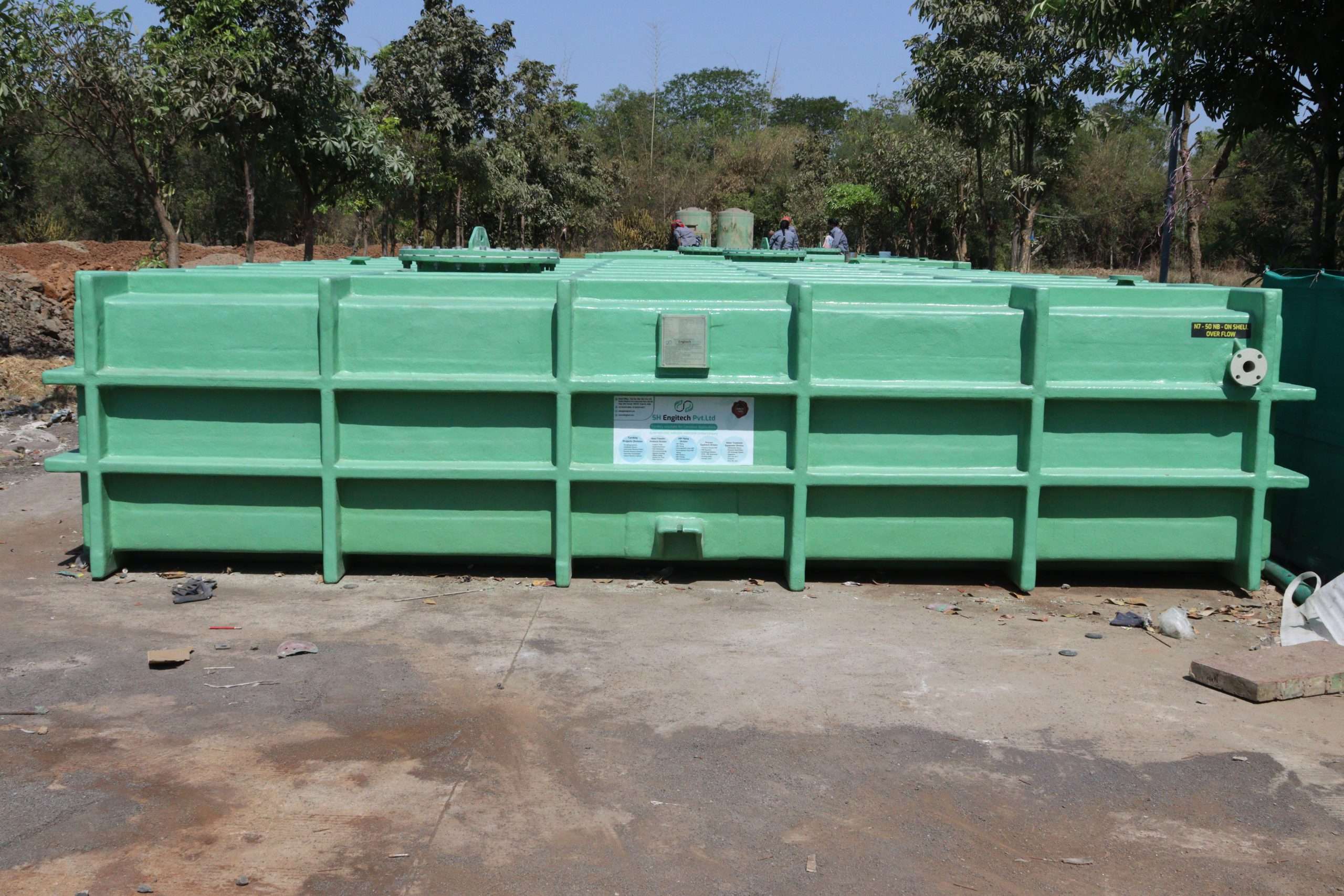
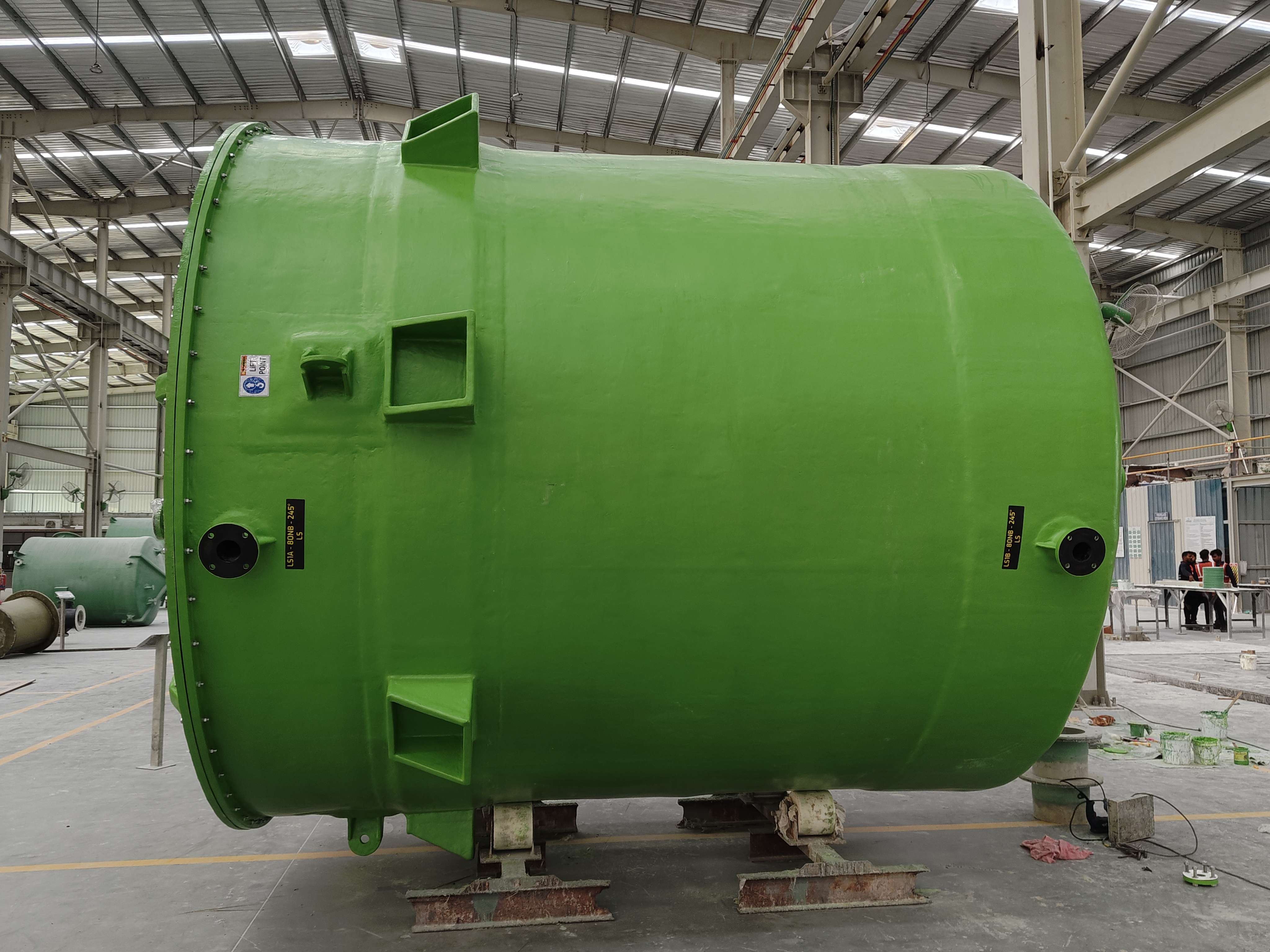
Cylindrical shells are made by filament winding, where a CNC machine winds glass fibre under tension for even strength. Nozzles, ends and rectangular tanks are made by hand lay-up or spray-up.
Standards and testing
What to ask your supplier
Two questions separate a reliable tank from a risky one. First, which standard is it designed to? BS EN 13121 and ASTM D 3299 are the recognised standards for FRP tanks. Second, how is it tested? Every tank should be hydro tested before it leaves the factory, with spark testing of the liner on dual laminate tanks and a Barcol hardness check to confirm the resin has cured.
To get an accurate design and quotation, have these details ready:
- The liquid, its strength and its normal and maximum temperature
- The capacity, and whether the tank will stand indoors or outdoors
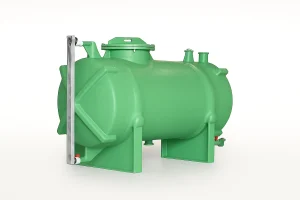
- Vertical, horizontal or rectangular, with a flat or cone bottom
- Nozzle sizes and positions, manhole, vent and overflow
Service life
Keeping an FRP tank in service
FRP tanks need little maintenance, but they do need inspection. At planned shutdowns, check the inside and outside for cracks, blisters or discolouration, and look closely at nozzles, gaskets and supports, where most leaks begin. Repair small damage early, before it reaches the structural layers.
Most importantly, stay within the design limits. Do not store a different chemical or run at a higher temperature without checking with the manufacturer.
Contact
Need support with your FRP tank?
SH Engitech has manufactured FRP tanks and corrosion-resistant process equipment in Vapi, Gujarat, since 1989, for clients worldwide. Tell us the liquid, temperature and capacity, and our engineers will recommend the right design.
Products

Comments (1)
SIC Goa August 7, 2025
Thanks for sharing this blog.